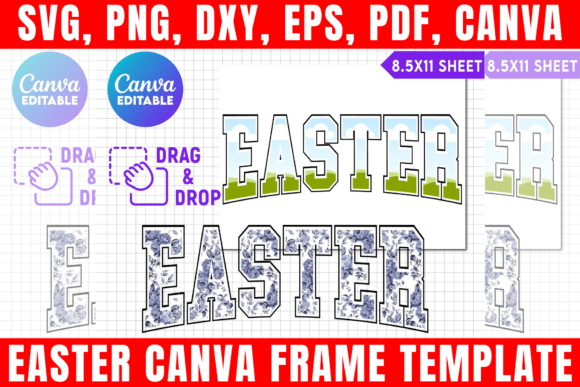
Easter Canva Frame Template Review
As a designer who spends more time staring at hoop sizes and stitch densities than sleeping, I approach every new asset with a healthy dose of skepticism. The market is flooded with generic clipart that falls apart under the needle or looks muddy when digitized. So, when Easter Canva Frame Template landed on my desk, I didn’t just look at the preview; I put it through the wringer. I wanted to know if this editable frame could survive the transition from a digital screen to a real-world embroidery project without losing its soul—or its structural integrity.
The premise is simple but powerful: an Easter-themed frame designed for customization in Canva. For those of us selling on Etsy or running a boutique craft business, the ability to tweak elements before sending to the machine is not just a convenience; it is a necessity. This product falls squarely into the category of Print Templates and Graphics, but its true value lies in how it translates to physical media. Here is my honest breakdown of how Easter Canva Frame Template performs in actual embroidery scenarios.
First Impressions and Visual Personality
When you first open the template, the mood is immediately set. It isn’t trying to be overly ornate or baroque, which is a relief. Many Easter designs get bogged down in too much detail, creating a "busy" look that gets lost in the fabric texture. This frame strikes a balance. It has a clean, modern aesthetic that feels fresh rather than dated. The layout provides ample negative space, which is critical for embroidery because it gives the thread room to breathe.
The visual personality is warm and inviting. It screams "springtime refresh," making it perfect for seasonal collections. However, as a reviewer, I am looking past the pretty colors. I am looking at the structure. The lines are distinct enough to be interpreted clearly by digitizing software, yet soft enough to maintain a handmade, artisanal feel. It doesn’t look like a rigid vector; it looks like something a human drew. That distinction matters immensely when you are pricing your work as a premium handmade product.
Real-World Application: From Screen to Stitch
Let’s talk about where this design actually shines. I tested the concept against several common small business merchandise items. The first scenario was a custom embroidered tote bag. Tote bags are high-volume items, often sold at craft fairs or online. Using Easter Canva Frame Template here allows for incredible personalization. A customer can add their name inside the frame, or you can swap out specific graphic elements to match different brand palettes. Because the template is editable, you aren’t stuck with a one-size-fits-all approach. You can create a cohesive collection of custom apparel and accessories that all share a unified visual language.
I also envisioned this working beautifully on baby clothes. Spring brings a surge in requests for baby shower gifts and newborn outfits. The gentle curves and thematic elements of this frame translate well to the smaller scale of a onesie or a burp cloth. When stitched onto soft cotton, the frame acts as a charming border, framing the baby’s name or a simple date. It adds a layer of professionalism to what might otherwise be a basic garment. For an Etsy seller, this means higher perceived value. Buyers are willing to pay more for a design that looks thoughtfully curated rather than mass-produced.
Another strong use case is holiday embroidery for home decor. Pillow covers and kitchen towels are classic spring staples. The frame works exceptionally well here because it provides a structured container for text or smaller motifs. Imagine a tea towel with a monogram centered within the frame, surrounded by subtle Easter accents. It elevates a simple utility item into a gift-worthy piece. This versatility is why Easter Canva Frame Template stands out; it isn’t limited to just one type of embroidery project.
Technical Considerations and Potential Pitfalls
No design is perfect, and transparency is key for any serious designer. While the vector base is clean, translation to a machine embroidery design requires careful attention to detail. If you are planning to use this for an embroidered patch or a cap, you need to consider the hoop size. Frames with intricate outer borders can sometimes compete with the central focal point if the hoop is too small. Always test the design on scrap fabric first to ensure the details don’t merge together.
Fabric texture plays a huge role in the final outcome. On a smooth cotton canvas, the lines will appear crisp. On a textured linen or a stretchy jersey knit, the edges might soften or distort slightly. This isn’t necessarily a flaw in the design, but a reality of the medium. When using this for sweatshirt embroidery or apparel decorators working with thicker fabrics, you may need to adjust the stitch density to prevent puckering. A dense fill stitch around the entire frame might be overkill; a combination of satin stitch for the outline and running stitch for accents often yields a more elegant result.
Color contrast is another critical factor. The template likely comes in standard black and white or color layers. Before finalizing, inspect the design in black and white mockups. Ensure that the internal elements stand out against the frame itself. If the frame is dark and the inner background is also dark, the design will vanish. This is especially important for commercial embroidery where consistency across multiple products is required. Use proper stabilizer backing, particularly for lightweight fabrics, to maintain the shape of the frame during stitching.
Stitch Density and Thread Choices
When digitizing this template, pay close attention to the stitch density. Avoid over-stitching the decorative elements. Less is often more in embroidery. Let the fabric show through where appropriate. For thread colors, stick to a limited palette. Easter themes can easily become chaotic with too many bright hues. A pastel palette with one or two accent colors tends to look more sophisticated and timeless. This approach helps build brand consistency for your shop, making your products instantly recognizable.
Final Verdict for Creative Entrepreneurs
So, does Easter Canva Frame Template earn a spot in your workflow? Yes, absolutely. It offers the flexibility that modern designers need while providing a polished, professional foundation. It is ideal for craft business owners looking to expand their spring inventory without starting from scratch. Whether you are creating personalized gifts, small shop products, or design assets for other creators, this template delivers value.
However, remember that a template is only as good as its execution. Do not assume it is ready-to-stitch straight out of the box. Treat it as a starting point. Adjust the dimensions, refine the details, and always, always do a test run. By taking the time to adapt this design to your specific needs, you transform a simple graphic into a unique finished product that customers will love. For anyone in the graphics and print templates space looking to bridge the gap between digital design and tactile creation, this is a smart, practical investment.
- Best For: Custom totes, baby items, home decor, and personalized gifts.
- Key Benefit: High editability in Canva allows for unique variations.
- Caution: Check stitch density and fabric compatibility before bulk production.
- Pro Tip: Use black and white previews to check contrast and visual balance.